Sovereign Devices
Private AI hardware. Sensitive work runs on a machine you own.
GB10-class sovereign AI machines, available in ASUS and Dell variants, sold and provisioned by us. The outcome: sensitive work runs on a machine you own — and you decide what, if anything, leaves it. A single unit runs models up to ~200B parameters (quantized); stack units to serve larger models and your whole company. Hardware from €3 650,22 excl. VAT (ASUS) / €4 328,25 excl. VAT (Dell) — indicative start prices; the full sovereign setup is quoted per engagement.
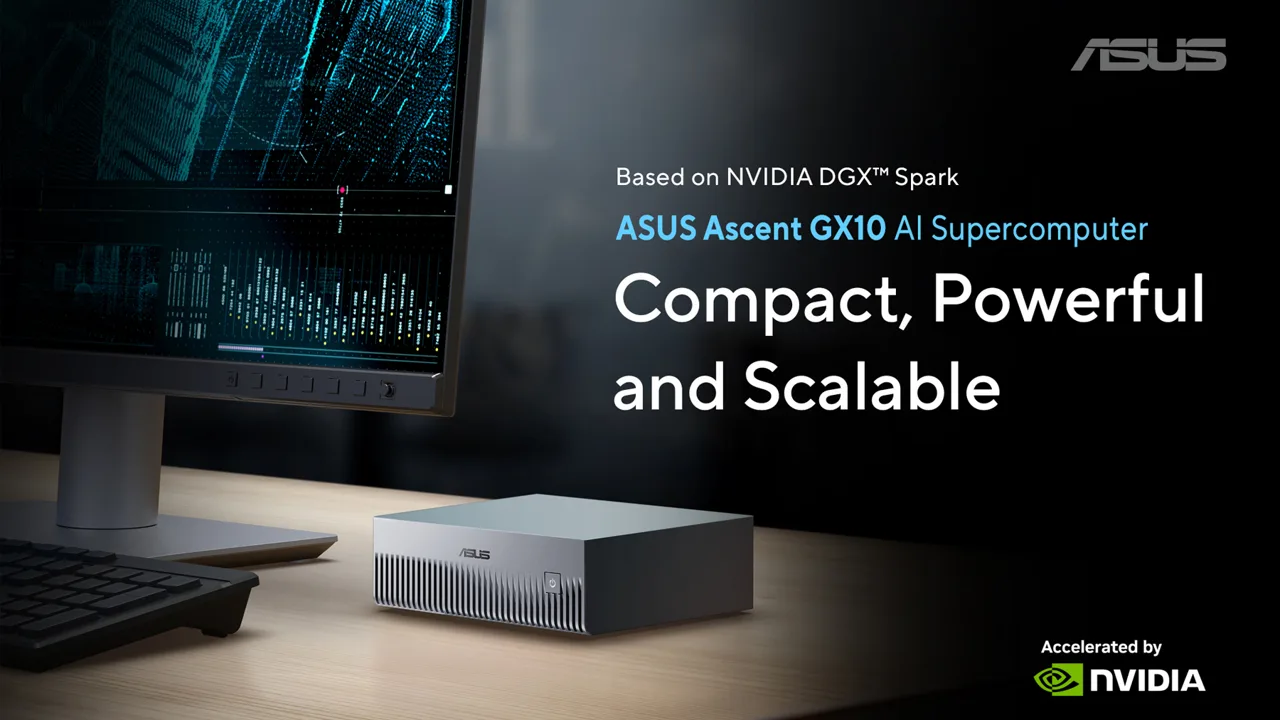
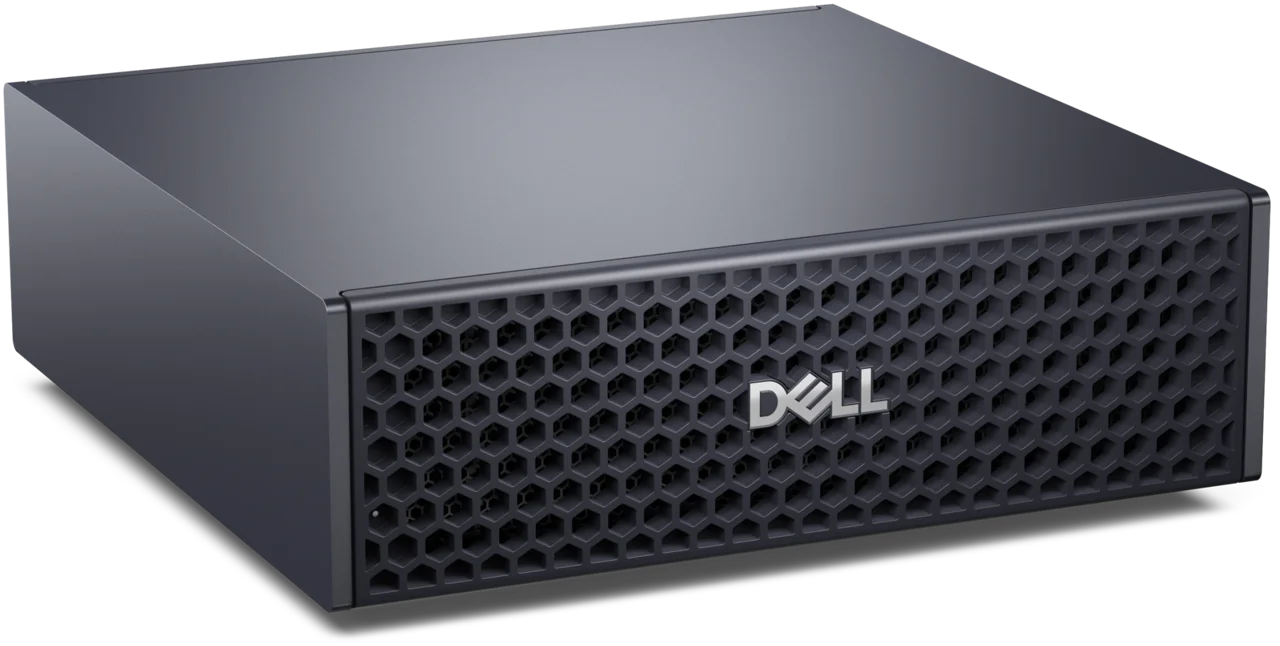
Indicative hardware starting prices, excl. VAT — the full sovereign setup (models, tailoring, installation, support) is quoted per engagement.
Official manufacturer product images — ASUS Ascent GX10 and Dell Pro Max with GB10.
What fits on one unit — and on two: the on-premises model catalog →
Sensitive work runs on a machine you own
Our devices are GB10-class machines — NVIDIA DGX Spark-class systems with 128 GB of unified memory, compact enough for an office. A single unit serves open-weight models up to roughly 200B parameters (quantized) entirely locally, so payroll data, contracts, and client files can be processed under your roof, on hardware you own.
We operate this exact hardware ourselves, daily, as the inference fleet behind our own products. What we sell is the setup we run.
- Available in ASUS and Dell variants — same GB10-class platform, your choice of manufacturer.
- Storage options of 1 TB, 2 TB, and 4 TB across the lineup — confirmed configurations; availability varies by variant, pricing quoted per engagement.
- Sold and provisioned by BrainOutput: delivered with a working model stack, not an empty box.
- The model runs on hardware you control — so you decide what leaves. Local processing is the default; anything you choose to send out is a decision, not a default.
What you get the moment the box arrives
We deliver the device express — and the box is not empty. Instantly, once you receive it: a working private model stack, a chatbot for the whole team, and a coding agent — installed and configured before shipping, ready for your team on day one.
The team chatbot is built on LibreChat: a private, ChatGPT-style web chat that runs against your device's private LLM, with retrieval (RAG) over your company's own documents, configured to your company — its activity, its rules, its governance, its team roles. Every coworker can open it in a browser and use the AI from day one, on-premise, with prompts and documents processed on the machine itself, under your roof.
The same precision as with OpenCode below: LibreChat is an independent open-source project, and we are not affiliated with it or with the maker of ChatGPT — "ChatGPT-style" is a comparison of the chat experience, not a partnership or an endorsement. What BrainOutput adds is the configuration: the private endpoint, the retrieval over your documents, and the rules and roles tuned to your company. We operate LibreChat stacks ourselves — the deployment recipe we ship is our own.
- A working private model stack — the device arrives serving your models, not waiting for a setup project.
- A tailored team chatbot via LibreChat — private, ChatGPT-style web chat with RAG over your own documents, shaped to your activity, rules, governance, and team roles.
- The tailored OpenCode coding agent for your engineering team — detailed further down this page.
- Express delivery of the device.
Stack units to cover your whole company
When one unit is not enough, units stack: interconnected devices serve larger models and handle an entire company's AI workload. We run our own production models across stacked units — the scaling path we sell is the one we use.
- Stack units to serve models larger than a single machine can hold.
- Scale capacity as your team's usage grows — add units, keep everything on-premise.
- Pricing and configurations: quoted per engagement — request an assessment and we scope the right sovereign setup for you.
Models that fit — including Europe's best
A single unit (128 GB unified memory) comfortably serves European flagship models — Mistral Large-class models (~120B parameters, quantized) run on one device, entirely under your control. European models on European-controlled hardware keeps the whole stack in one jurisdiction, end to end.
We publish what we run: Qwen3.5-122B serves on a single unit in our own fleet, and our company's planning and coding brain — DeepSeek-V4-Flash, a 284B-parameter mixture-of-experts model — runs in production across two stacked units. These are measured deployments, not datasheet promises.
- One unit: Mistral Large-class (~120B quantized), Qwen3.5-122B-class, and every smaller open-weight model — coding, chat, embedding.
- Two stacked units: ~300B-class mixture-of-experts models (our own production configuration) with headroom toward ~400B-class quantized.
- Mistral and the growing European open-weight ecosystem, first-class: EU models, EU hardware, EU data residency.
What companies run on them
Sovereign AI is what businesses search for when the cloud stops being an option. These machines answer the use cases behind that search:
- Private document analysis and retrieval (RAG) — contracts, dossiers, and archives queried on-premise.
- On-premises AI assistants and agent teams for regulated professions — GDPR and EU AI Act aligned by construction.
- A whole AI company running on-premise — roles, a backlog, and human approval gates, with prompts and documents processed under your roof.
- Private coding assistants for your engineering team — code and context stay on hardware you control.
- Customer service and back-office automation on your own hardware, in your own language.
OpenCode, tailored to your device
Every device ships with OpenCode — an open-source coding agent — installed and tailored by us to the private models running on that machine.
For your IT team, the workflow is the one they already know from tools like Claude Code: the same coding-agent working style, in the terminal and in the editor, with no learning curve. The decisive difference is what sits behind it — a private LLM on your own hardware. Prompts, context, and source code are processed on the machine; you decide what, if anything, goes further.
To be precise about what this is: OpenCode is an independent open-source project, and we are not affiliated with it or with the makers of the tools we compare it to — "tools like Claude Code" is a comparison of working style, not a partnership or an endorsement. What BrainOutput adds is the tailoring: model choice, endpoints, context limits, and agent settings matched to your device.
We run this exact setup ourselves: our own coding workers run OpenCode against our own device fleet, every day. The configuration we ship to customers is the one we work in.
- The coding-agent workflow your team already knows — backed by a private LLM, so code and context stay on hardware you control.
- Useful beyond human engineers: coding workers and agents drive the same OpenCode setup unattended.
- Tailored per device by us: models, endpoints, and agent configuration tuned to your machine.
Why sovereign hardware
The model runs on hardware you control, so you decide what leaves. We can show what that looks like in practice: in a documented run on our own fleet (July 2026), a mission containing salary figures and employee names was processed on a local GB10-class unit, and only a sanitized brief — no names, no figures — went on to a hosted model for the general stage. The routing in that run was configured deliberately, and the system does not automatically detect what is sensitive — the run shows where each stage was processed, and it is not a compliance guarantee.
Our devices, deployments, and operating processes are designed with ISO/IEC 42001 AI management principles in mind — risk management, accountability, and lifecycle governance built into how we provision and maintain every machine.